

As Uganda headed into the 2026 general election, a number of women expressed interest in contesting for the presidency. This marked another chapter in the country’s struggle to elevate women to the highest political office. Historically, Miria Obote, wife of former president Apollo Milton Obote, was the first women to break the glass ceiling when she contested for the preidency in 2006. Later Beti Kamya tried in 2011, Maureen Kyalya in 2016, and Nancy Linda Kalembe in 2021. Sadly, none has successfully secured the top seat.
For the 2026 race, the Electoral Commission received expressions of interest from 204 individuals including 22 women. Among them was Nancy Kalembe, making a second attempt. However, as the nomination process unfolded, it became clear that not a single one of the 22 women would make it onto the final ballot, underscoring once again how steep the path to the presidency remains for female aspirants.
To understand Kalembe’s persistence, it helps to look at her background. Born on September 15 1980 to George Patrick Bageya and Aida Cissy Kubaaza, she attended Mount Saint Mary’s College Namagunga for her O-Level and Mariam High School for her A-Level. In 2007, she graduated from Makerere University with a Bachelor’s degree in Population Studies. These experiences, she says, shaped the foundation of a leadership journey she envisioned from the age of 14.
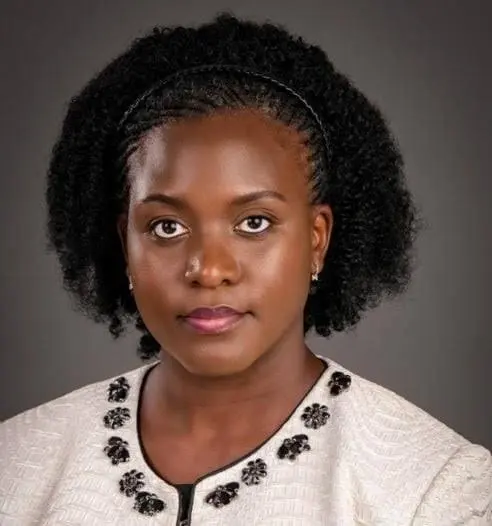
This early dream evolved into a deliberate life mission. As a mother, businesswoman, farmer, author, and church servant, Kalembe believed that every step she took was preparing her for national leadership. Her return to the presidential race in 2026 was therefore not surprising- it was the continuation of a vision she had nurtured for decades.
However, this second attempt came with challenges she had not anticipated. While her 2021 nomination process was smooth and professionally handled, Kalembe says, “The 2026 process was marked by corruption, misinformation, and obstruction.”
The first signs appeared shortly after her team submitted the required signatures from at least 100 districts. Although some Electoral Commission officials were supportive, Kalembe claims that others demanded bribes to clear her paperwork, an issue she had not encountered in her first bid. This shift in tone made her suspect that her campaign was facing targeted interference.
Her fears were confirmed on nomination day 3rd November 2025.
“I was handed a fake report stating that I lacked enough valid signatures. When I sought clarification, I was told that many of my signatures had been rejected because the owners also signed for another aspirant who submitted earlier. To me, this explanation did not add up,” Kalembe narrates, reinforcing her belief that the report had been manipulated to block her nomination.
Even with the setback, Kalembe says she remains undeterred. She views her experience as part of the broader struggle women face when entering leadership spaces historically reserved for men. Yet she believes progress is inevitable. As she puts it, if women contributed to the scientific calculations that sent a man to the moon, then breaking political barriers in Uganda is also possible.
Her reflections also touch on the disappointment felt by some members of the public who had hoped to see her name on the ballot. For Kalembe, the issues that motivated her candidacy- education, health care, employment, housing, and the fight against corruption- remain at the heart of her work. She insists that corruption, in particular, poses the greatest threat to Uganda’s future.
Despite the challenges, Kalembe is looking ahead. She has already announced her intention to run again in 2031, encouraging her supporters to remain hopeful and grounded in gratitude. To Ugandan women, she offers a message of empowerment- if they can manage the multiple responsibilities of home, they already possess the spirit and skill of leaders.
Kalembe’s experience also resonates with concerns raised by gender experts. Charity Ahimbisibwe, Executive Director of the Electoral Laws Institute observes that while political campaigns tend to focus on youth and unemployment, the issue of gender inequality remains largely unaddressed. She notes that although women have made strides at the Local Council and parliamentary levels, their absence from the highest office reflects deeper structural barriers.
According to Ahimbisibwe, the lack of a female presidential candidate sends a troubling message. She argues that Uganda cannot achieve true progress until it fully embraces the Beijing Declaration and takes deliberate steps to eliminate discrimination against women. For her, meaningful representation includes consistently seeing women contest for, and occupy top leadership roles.
Political analysts echo this sentiment. Arnold Katongole stresses that the state has a responsibility to support women’s political participation and ensure equal rights. He adds that leadership should be based on capability, not gender.
“If a female presidential candidate presents a convincing manifesto, I would support her,” he says, pointing to Article 21 of the Constitution, which guarantees equality for all Ugandans.
Kalembe’s previous performance also highlights her role in Uganda’s political landscape. In the 2021 elections, she garnered 38,772 votes, representing about 0.37% of the total ballots cast. Though modest, it positioned her as one of the most recognizable female political figures of that cycle.
Understanding the legal framework helps explain the hurdles aspirants face. Uganda’s Presidential Elections Act requires that candidates be Ugandan citizens, at least 18 years old, and hold a minimum academic qualification of Senior Six or its equivalent. With 147 districts, aspirants must collect verified signatures from at least two-thirds, equivalent to 98 districts amounting to a minimum of 9,800 supporters.
According to Julius Mucunguzi, spokesperson of the Electoral Commission, the Commission’s role is to enforce these legal requirements uniformly. He emphasizes that picking nomination forms is simply an expression of interest, and aspirants only become candidates after meeting all the criteria. He also notes that the law does not require a female candidate in every election; it only outlines qualifications for any citizen who wishes to run.
Ordinary Ugandans have also weighed in on the debate. Voter Bethel Raphael believes that a female president would be a welcome change. “It’s not about gender,” he says. “Leadership is about democracy and integrity.”
Similarly, Patricia Alanyi from Gulu says she would support a female president as long as she is mature, knowledgeable, and committed to upholding the Constitution. For her, a woman in power could usher in a more empowered Uganda.

Nancy Kalembe’s story is more than a political attempt it is a testament to courage, persistence, and the pursuit of representation. Her academic achievements, leadership aspirations, and willingness to step into male-dominated spaces highlight the growing desire among Ugandan women to shape the nation’s future. While she did not make it to the ballot paper, her involvement continues to spark important conversations about gender equality, inclusive leadership, and the need for more women at the highest levels of decision-making. Ultimately, Kalembe’s journey reminds Uganda that true democracy flourishes when all voices,women and men alike, are given equal opportunity to lead.
The production of this story was made possible through financial support from the Finnish Foundation for Media and Development (VIKES),in partnership with the Uganda Media Women Association( UMWA).