Saving for Strength: How Tuzuuke iSave Women Are Rewriting Their Future
In a country where over 4.5 million people live with disabilities and women are disproportionately affected, access to employment remains a major hurdle, especially in rural areas. But in the heart of Eastern Uganda, a group of women is rewriting that narrative. Through the Tuzuuke saving group, they’ve built a self -run savings and loan system, turning farming, retail, and handmade crafts into powerful tools of independence and resilience.
It’s a sunny, chilly Wednesday morning in Mawundo Village, Bulanga Parish, Iganga District. Inside a thatched house, women sit cross-legged on mats, their hands holding small blue notebooks and some cash. In the middle of the room sits a large metal box their trusted savings bank. At the entrance, crutches lie on the floor.
This is not just any gathering; it’s the weekly meeting of the Tuzuuke iSave (Let’s Rise Up) Women’sGroup, where dreams are turned into reality.
The group is made up of 30 women, all living with different disabilities or, as they proudly say, abled differently. With contributions starting from as little as 2,000 Uganda shillings, each woman gives according to her means. Their savings books feature stars each star representing a share. The more stars, the greater the stake in the group. A mandatory 500-shilling contribution to the social fund is also made during each cycle.
Saving is done in cycles of 8 weeks, 8 months, or a year. The women can access loans from the group at just 1% interest, allowing them to invest in small businesses and support their families.

Menya Ibrahim Nkutu, the LC1 Chairperson for PWDs in Mawundo Village, is challenging stereotypes.
“Being disabled doesn’t mean we can’t think. We have potential,” he says. “If we unite as people with disabilities, we can benefit from programs and lift ourselves up. It starts with us.”
From tailoring and vending to farming and bead-making, the women of Tuzuuke iSave are proving that resilience, unity, and financial empowerment are rewriting lives, Menya narrates.
Eranda Moses, a Community-Based Facilitator in Bulanga Parish, emphasized the need for inclusive and transparent support for women with disabilities (PWDs).
“If they are to implement programs that support women with disabilities, they should stop discrimination,” he says. “There should be accountability for the money being allocated to PWDs, and these services should be brought down to the village level where movement is more flexible for them.”
The rhythmic hum of a sewing machine blends with the laughter of children playing outside. Outside her modest home, Mutesi Tahiya, dressed in a white t-shirt and a floral skirt, moves her hands with purpose. Madina, who lives with partial visual loss, found not just financial help, but sisterhood and purpose.
You wouldn’t guess that just a few years ago, she barely had enough to buy fabric.
“I came to the group with 5,000 shillings,” she recalls, adjusting a piece of kitenge cloth. She already had a machine.
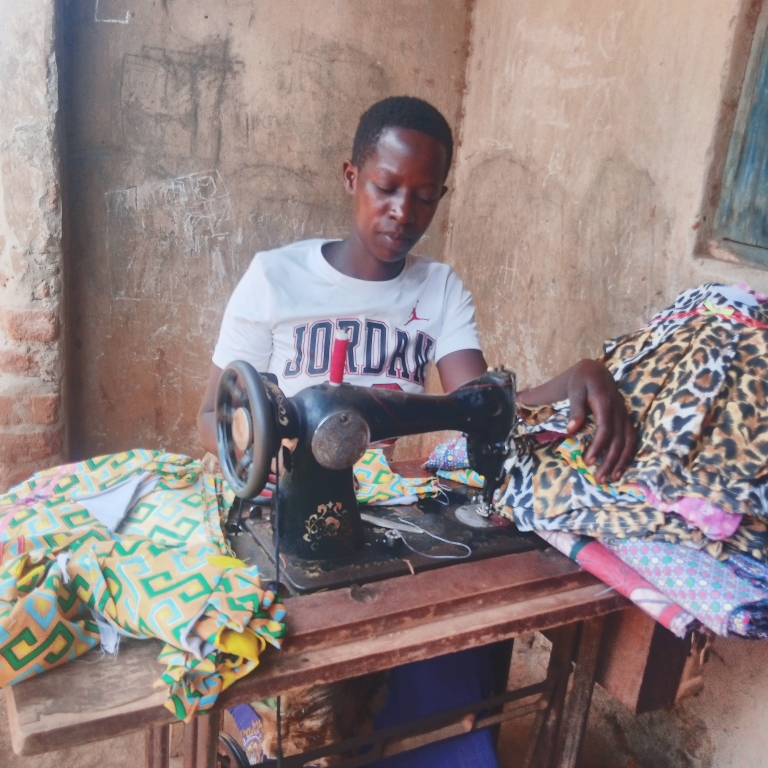
With that, she bought her first roll of fabric. Her small tailoring business began with a few shirts and skirts. Now, she takes orders from neighbors and even sells clothes at local markets.
“I don’t just sit at home anymore,” she says with a smile. “I am working. I am earning. I feel proud of who I am.”
At the edge of the village, Maureen Kisakye begins her day by arranging essential household items in a plastic basin salt, matchboxes, sugar, curry powder, onions among others. Born with a spinal condition, and though she doesn’t use a wheelchair, movement can be difficult. So, instead of a shop, the shop comes to her. Clients walk up to her home, chat briefly, and leave with goods.
“I started with just 20,000 shillings from my mother,” she says. “I saved half. The group added 50,000, and that was the beginning.”
Maureen uses her savings to cater for personal needs like transport. When going somewhere, she doesn’t need to ask anyone for help. Her mother helps her in restocking the finished items in her shop.
Her smile widens as she shows off her latest beaded bracelets, handmade in the afternoons when business slows. With each sale, she’s proving mobility doesn’t define ability.

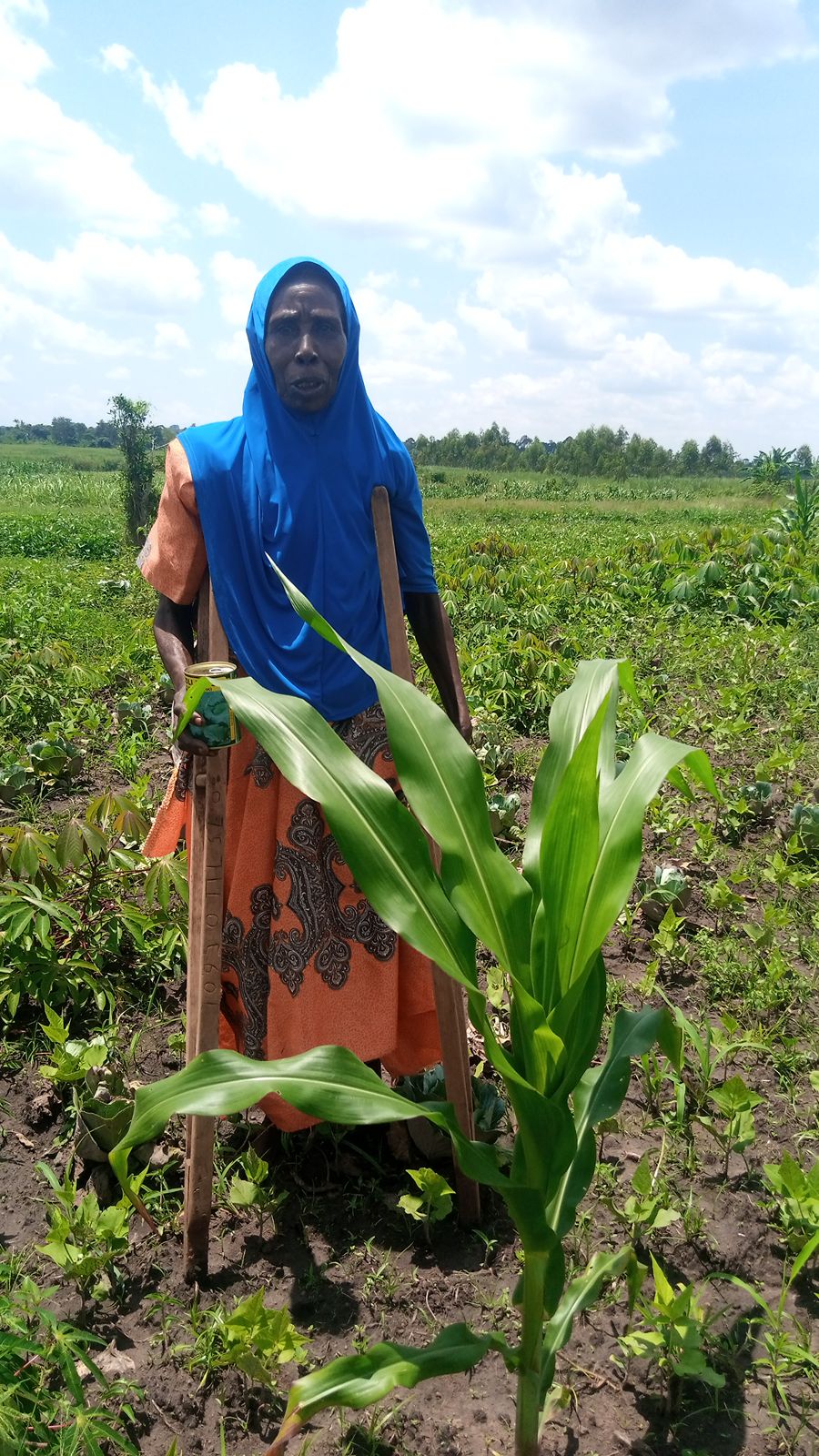
In a garden where cassava plants stretch toward the sky, Aisha Babirye, now a grandmother, bends over a row of cabbages. Her hands are rough from years of digging her spirit, unbreakable.
“I joined the group in 2023,” she says. “Now, I weave mats, I farm, I earn. I don’t beg.”
At 10,000 shillings per mat, she’s weaving more than products she’s weaving legacy.
The story of the Tuzuuke iSave Women’s Group is a powerful example of how community –driven initiatives can transform lives .by creating a space where women with disabilities support one another through saving, lending ,and entrepreneurship ,the group has fostered not just financial independence but also renewed confidence and purpose. Such models of grassroots empowerment demonstrate the potential for inclusive development, especially in rural areas. With increased recognition and support initiatives like this could be replicated across the country, offering many more women the opportunity to build dignified self-sustaining futures.